



Understanding Anxiety•8 min read
A lot of behavior that gets labeled naughty is actually fear. Dogs don’t chew baseboards out of spite or bark at the door to annoy you — those are usually stress responses, and treating them as disobedience makes them worse.
The subtle signs come first: yawning and lip-licking out of context, panting when not hot, whale eye, and freezing. The obvious ones follow: destruction at exits, vocalizing when alone, pacing, indoor accidents, and appetite changes. But check the flip side too — boredom, a training gap, and especially pain all look identical from the outside.
Here are the signs, starting with the ones most people miss.
The subtle signs (most commonly missed)
These are early warnings. A dog showing them is telling you they’re uncomfortable well before anything escalates.
Yawning and lip-licking out of context
A yawn when your dog isn’t tired, or a quick tongue flick when nothing’s been eaten, are classic low-level stress signals.
Watch for them at the vet, when a stranger leans over your dog, or when children get too close.
Panting when they’re not hot
Panting without heat or exercise is one of the most reliable stress indicators — and one of the most consistently misread. If your dog is panting in a cool room having done nothing, something is bothering them.
Whale eye
The whites of the eyes showing as your dog turns their head away but keeps watching. This means “I’m uncomfortable and I want out of this.” It’s very often visible in photos of children hugging dogs.
Turning away, freezing, or going very still
A dog who goes rigid and stops moving isn’t relaxed. Stillness is a stress response — the step before either backing off or reacting. A dog who suddenly goes quiet in a busy situation may be shutting down rather than settling.
The obvious signs
Destructive behavior when left alone
Chewing door frames, scratching at doors, destroying things near exits. The location matters — damage concentrated at doors and windows points to distress about being alone, rather than boredom, which tends to be scattered.
Barking, whining, or howling when alone
Especially if it starts within minutes of you leaving. Recording the first 15 minutes after departure tells you a lot — barking that begins immediately and continues suggests distress, while occasional barking at outside noises is normal. See why does my dog bark when I leave?
Pacing and inability to settle
A dog who circles, moves bed to bed, and never fully switches off. Often most obvious in the evening, and frequently mistaken for a dog who’s “just energetic.”
Toileting indoors despite being house-trained
Accidents from a reliably house-trained dog, especially while alone, are usually stress rather than a training lapse. Punishment makes this significantly worse.
Appetite changes
Refusing food they normally like, or eating too fast and bringing it back up. Many anxious dogs won’t eat at all when alone or in a stressful environment.
What’s often mistaken for anxiety
This is the important flip side, and getting it wrong wastes months.
Destructive, restless, vocal — looks identical from the outside. The tell: a bored dog is fine when you’re home and active, and their damage is scattered rather than focused on exits. The fix is exercise and enrichment, not calming products.
A dog who was never taught to settle alone isn’t anxious; they’ve got a training gap. Common in dogs acquired during periods when someone was always home.
This one matters most. Restlessness, panting, night waking, sudden reactivity, and reluctance to be touched are all common signs of pain. Older dogs especially.
In senior dogs, night pacing, confusion, staring at walls, and disrupted sleep may indicate cognitive dysfunction, which needs veterinary assessment.
The rule: any sudden behavior change should be checked by a vet first. Anxiety that appears overnight in a previously settled dog is a medical question until proven otherwise.
What to do next
if this is new, sudden, or your dog is older. Rule out pain before anything else.
Most dogs labeled anxious are under-stimulated. Is your dog getting genuine physical exercise and something to think about every day?
Dogs need far more sleep than most owners realize, and broken sleep amplifies everything.
Predictability is the single most calming thing you can offer an anxious dog — consistent meal times, walk times, and bed times.
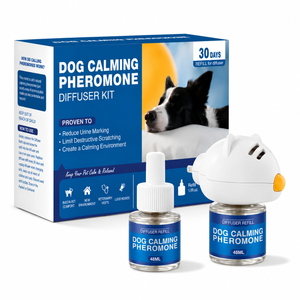
Once you’ve ruled out pain and boredom, making the home feel safer is where a calming diffuser fits — as one layer, alongside the four steps above rather than instead of them.
Panic-level distress, self-injury, or aggression needs a qualified behaviorist.

Frequently asked questions
Routine, exercise and training do the heavy lifting. A calming diffuser makes the room itself feel safer — and if your dog isn’t calmer in 30 days, you pay nothing.
Shop the Dog Calming Diffuser Kit →Related reading: the complete guide to dog calming diffusers · why does my dog bark when I leave? · comparing calming products
General information only, not veterinary advice. Please see your vet if your dog’s behavior has changed suddenly.