



Calming & Anxiety•8 min read
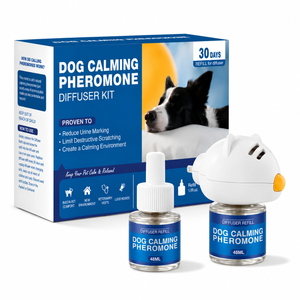
A dog calming diffuser is a plug-in device that releases a synthetic copy of a natural dog pheromone into a room. The goal is simple: make the space feel more secure to your dog, so the everyday things that set them off — being left alone, thunder, doorbells, a house full of visitors — feel less threatening.
Calming diffusers help some dogs with mild-to-moderate, ongoing anxiety. Effects are subtle — settling faster, less pacing, quieter nights — not dramatic. Give it two to four weeks, one diffuser per room your dog actually uses, running continuously. Placement is what decides whether it works at all.
This guide covers what they are, what the evidence actually says, who they help most, and how to set one up so it has a fair chance of working.
What is a dog calming diffuser?
It's an electrical plug-in, similar in size to an air freshener, holding a refill vial. It warms the liquid gently so it disperses into the room continuously.
What it releases is a synthetic analog of dog appeasing pheromone — a chemical signal a mother dog produces while nursing her puppies. The theory is that this signal communicates safety, and that dogs continue to respond to it into adulthood.
How does a calming diffuser work?
The pheromone is species-specific. Dogs have a specialized structure for detecting these signals, and the synthetic version is designed to bind the same way the natural one does. Humans, cats, and other pets don't have receptors for the dog version, which is why it doesn't affect anyone else in the house.
Because it works through the air, coverage is limited to roughly one room. Pheromone doesn't travel around corners or through closed doors, which is the single most misunderstood thing about these devices — and the reason so many people conclude they "don't work" when the real problem is placement.
Our kit is designed to support one main room per diffuser, and each refill lasts about 60 days when used as directed.
Does it actually work?
Honestly: the research is mixed, and you should be skeptical of anyone who tells you otherwise.
Several controlled studies have reported measurable benefits — in shelter dogs, during veterinary visits, and in puppies adjusting to new homes. Other studies have found no significant difference against placebo. Systematic reviews of the literature have generally concluded the evidence base is promising but limited, with small sample sizes and inconsistent methods.
What that means practically:
We'd rather you buy this with realistic expectations than return it disappointed. For a deeper look at the studies, see our post on what the evidence says about pheromone diffusers.
Which dogs benefit most?
Based on the research and what our customers report, diffusers tend to help most with ambient, ongoing, environmental anxiety rather than acute panic.
How long does it take to work?
Allow two to four weeks for a fair trial. Some owners notice small changes within a few days; more often the shift is gradual enough that you only see it looking back.
For a predictable event like fireworks night, plug it in several days beforehand rather than an hour before. The room needs time to reach a steady concentration.
We've broken the timeline down properly in what to expect in your first 30 days.
How many diffusers do you need?
One per room where your dog actually spends time — not one per house.
Every kit includes refills. You can also subscribe and save 20% — delivered every 2 months, skip or cancel anytime.

Getting the setup right
Placement decides whether this works. The short version:
Full details, including the five worst places to plug one in, are in our placement guide.
Is it safe?
Diffusers are generally considered safe for households with children, cats, and other pets, since the pheromone is dog-specific. The main precautions are electrical rather than chemical — use an accessible socket, don't cover the unit, and don't run it under fabric.
We cover the common safety questions in detail in is a calming diffuser safe?
Frequently asked questions
Plug it in, leave it running, and judge it after four weeks. If your dog isn't calmer, you pay nothing.
Shop the Dog Calming Diffuser Kit →This article is general information, not veterinary advice. If your dog's anxiety is severe or has come on suddenly, please speak to your vet.