



New Dog•8 min read
The first few weeks with a new dog set the pattern for everything after. The most useful thing to understand upfront is that the dog you meet in week one is not the dog you’ll have in month three — and that the quiet, well-behaved new arrival is often a shut-down dog rather than a settled one.
Think 3 days to decompress, 3 weeks to relax, 3 months to settle. Prepare the space and start a calming diffuser a week before they arrive, keep them near you the first few nights, and give them a small, quiet, predictable world — routine matters more than any product. Don’t judge the dog in week one.
Here’s what actually helps.
Prepare before they arrive
Set up the space first
Decide where they’ll sleep and where their safe spot is before the dog is in the house. Trying to work it out while a frightened animal watches you is worse for everyone.
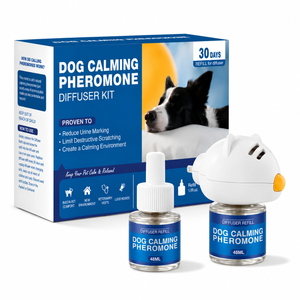
Start the calming diffuser a few days early
A diffuser takes days to reach a steady level in a room, so plugging it in as you walk through the door achieves very little. Set it up in the room they’ll sleep in, and the main living space, at least a week ahead.
Reduce the welcome party
No friends and family coming to meet the new dog in week one. It’s overwhelming, and the dog has no way to opt out.

The first night
Expect it to be difficult, and plan for that rather than being surprised.
The decompression period
This is the thing most people aren’t told about rescue dogs, and it explains a lot of confusing behavior. A new dog often goes through a rough sequence:
Quiet, still, sometimes not eating. This is not a calm dog — it’s an overwhelmed one.
Their actual personality begins appearing, which sometimes means behaviors you didn’t see at first.
This is where you find out who your dog is.
Don’t judge the dog in week one, and don’t panic when new behaviors appear in week three. That’s not regression — that’s the dog finally feeling safe enough to be themselves.
What helps most in the first month
Routine above everything
Same wake time, same meal times, same walk times. Predictability is what makes a strange house feel safe. It matters more than any product, toy, or training method.
Less, not more
The instinct is to take them everywhere and show them everything. Resist it. A new dog needs a small, quiet world that gradually expands — not a fortnight of new experiences.
A space they can leave
A bed or open crate they can retreat to, that nobody bothers them in. Children especially need to be taught that this space is off-limits.
Sleep
New dogs are exhausted and often massively under-sleeping. A dog getting broken sleep is a dog who can’t cope with anything.
Short separations early
Don’t spend two weeks never leaving their side and then go back to work. Build up small absences from the start — a few minutes, then longer — so being alone is normal rather than a shock. See why does my dog bark when I leave.
Common early problems
When to get help
Contact your vet or a qualified behaviorist if:
Getting help early is much easier than undoing a pattern six months in.
Frequently asked questions
Plug it in a week before pickup so the space is already settled on day one. Routine does the rest — and if your dog isn’t calmer in 30 days, you pay nothing.
Shop the Dog Calming Diffuser Kit →Related reading: 9 signs your dog is anxious · your first 30 days with a diffuser · the complete guide to dog calming diffusers
General information only, not veterinary advice. If you’re worried about a new dog’s health or behavior, please speak to your vet.