



Noise & Storms•9 min read
Noise phobia is one of the most common fears in dogs, and it tends to get worse over a dog’s life rather than better. The single most useful thing to know: almost everything that helps has to be done days in advance, not on the night.
Build a safe room and start a calming diffuser a week ahead. On the night: feed and walk before dusk, close curtains to block the flashes, add steady background sound, leave interior doors open so your dog can choose where to hide, and stay home if you can. And comforting a frightened dog does not reward fear — that myth is simply wrong.
Check your dog’s microchip and ID tag details are current. More dogs go missing around fireworks nights than at any other time of year, and a panicked dog can clear a fence they’ve never attempted before. It takes two minutes and it’s the highest-value thing on this page.
Here’s a plan that works backwards from the event.
One to two weeks before
Build the safe space now, not on the night
Pick the quietest room in the house — ideally interior, with fewest windows, and below ground level if you have a basement. Set up a bed or covered crate there, and start feeding treats and chews in that spot so it becomes a genuinely good place rather than somewhere they get shut in when scary things happen.
Start the diffuser
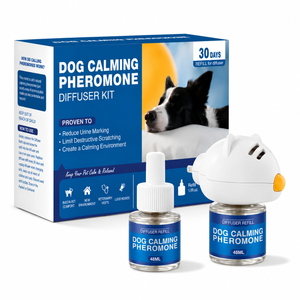
A calming diffuser needs time to reach a steady level in the room and isn’t a same-day fix. Plug it in at least a week ahead, in the safe room, and leave it running continuously.
Check the microchip and ID
Confirm your chip details are current, and that the tag on the collar is readable. This is the single most important item on the list.

The day before
On the night
Feed and walk early
Get both done well before dusk. Many dogs won’t eat once the noise starts, and a walk during fireworks is genuinely risky.
Close everything
Windows, curtains, blinds. Blocking the flashes matters as much as muffling the noise — the visual component is a big part of firework fear.
Add steady background sound
Not loud music — something constant. Television, a fan, or radio at normal volume masks the sharp peaks that trigger the startle response.
Leave interior doors open
Let your dog choose where to be. Dogs often want to move — under a bed, behind the sofa, into the bathtub. Restricting that choice makes panic worse.
Stay home if you can
Your presence is the most reliable comfort available. If you can’t, this is the worst possible night to leave a noise-phobic dog alone.
What to do when they’re frightened
Comforting your dog does not reward fear. Fear is an emotional state, not a behavior you can reinforce with attention. If your dog comes to you, comfort them.
Signs your dog is frightened
Not always obvious. Watch for:
More on reading these in 9 signs your dog is anxious.
Building longer-term tolerance
For a dog whose fear is severe, the seasonal plan isn’t enough on its own. Two things genuinely change the picture over time:
Sound desensitization
Recordings of fireworks played at a very low volume, paired with something good, gradually increased over weeks or months. Done properly it’s slow and boring, which is why it works. Done too fast, it makes things worse — the volume must always stay below the level that produces a reaction.
Professional help
If your dog panics to the point of injuring themselves, destroying doors, or escaping, that’s beyond what a diffuser and a quiet room can fix. A qualified behaviorist, and in some cases medication from your vet, is the right answer. Arrange this months ahead — vets get very busy in the weeks before fireworks season.
A note on storm season: storms can’t be diaried the way July 4th can. If your dog reacts to thunder, it makes more sense to keep a diffuser running through storm season than to plug one in reactively when the forecast turns — by then it’s already too late to build up.
Frequently asked questions
Set up the safe room and get the diffuser running before the first bang. There’s no same-day fix — and if your dog isn’t calmer in 30 days, you pay nothing.
Shop the Dog Calming Diffuser Kit →Related reading: 9 signs your dog is anxious · diffuser vs treats vs Thundershirt · the complete guide to dog calming diffusers
General information only, not veterinary advice. For severe noise phobia, please speak to your vet or a qualified behaviorist.