



Multi-Dog Homes•7 min read
The most common question here has a reassuring answer: you don’t need one diffuser per dog. The pheromone disperses into the air of a room and is available to every dog in that space. What multi-dog homes usually need is more rooms covered, not more units per room.
Count rooms, not dogs. Three dogs in one living room need one diffuser; one dog across three floors needs three. Most two- and three-dog homes land on two or three, because multiple dogs use more of the house and tension clusters in specific spots. It helps low-level ongoing tension — it does not address genuine aggression.
Here’s how to think about it.
How many diffusers for multiple dogs?
Count rooms, not dogs. It’s the space that determines the number.
Three dogs sharing one living room need one diffuser in that room. One dog with the run of three floors needs three.
That said, multi-dog households do tend to need broader coverage in practice, for two reasons:
Multiple dogs rarely all settle in the same spot.
Friction between dogs clusters in specific places — doorways, feeding areas, the sofa, the top of the stairs.
Most two- and three-dog homes end up wanting two or three diffusers.
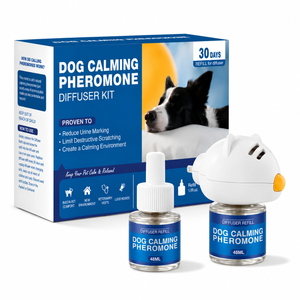
Our Dog Calming Diffuser Kit comes in matching bundles, and the room-by-room guide walks through the count.
Where to place them in a multi-dog home
Prioritize in this order:
Wherever they settle at night. If they sleep in separate rooms, both need coverage.
Where the household congregates and where most low-level friction happens.
If tension consistently flares in a specific spot — near the food bowls, at a narrow doorway, around the back door — that room is worth covering.
Standard placement rules still apply: low socket, unobstructed, away from windows, vents, and fans. See the placement guide.
What it can help with
Diffusers are best suited to low-level, ongoing tension rather than acute conflict:
That last one is worth naming. In multi-dog homes, panic is contagious. A calmer baseline across the group can stop one dog’s reaction escalating into all of them.
What it can’t help with
Be clear-eyed about this, because getting it wrong is dangerous:
Fighting, resource guarding with teeth, or injuries are not a pheromone problem. That needs a qualified behaviorist, and in the meantime, active management — separation, controlled feeding, no unsupervised access.
If a dog is guarding food, toys, or people to the point of conflict, no diffuser addresses that. Management and professional training do.
Sometimes dogs simply don’t get on, or one is elderly and being harassed by a young dog. That’s a structural problem needing structural solutions — separate spaces, separate routines.
If your dogs have had a fight that drew blood or left anyone injured, please get professional help rather than adding a product.
Introducing a new dog
This is where diffusers are most useful in a multi-dog context, because the trigger is predictable and time-limited.
Before the new dog arrives
Plug in the diffuser at least a week ahead, in the main living area and wherever the new dog will sleep. The room should already be settled before they walk in.
During the first weeks
Keep it running through the whole settling-in period, which typically takes weeks rather than days. See settling a new puppy or rescue dog.

Managing the day-to-day
A few things that help more than any product:
Frequently asked questions
One unit covers every dog in the room. Pick the kit that matches your layout — and if your dogs aren’t calmer in 30 days, you pay nothing.
Shop the Dog Calming Diffuser Kit →Related reading: how many diffusers do I need? · settling a new dog · the complete guide to dog calming diffusers
General information only, not veterinary advice. Aggression between dogs should be assessed by a qualified behaviorist.