


Getting More From It•7 min read
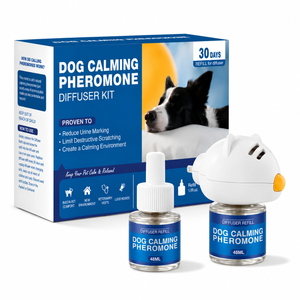
A diffuser on its own does one job: it makes a room feel a bit safer. Everything else that reduces anxiety — routine, exercise, training, sleep — still has to happen. The owners who get the most out of these devices are the ones who treat it as one layer rather than the whole answer.
Run it before the trigger rather than during. Pair it with a boring departure routine, exercise beforehand, and a proper sleeping setup. Change one thing at a time, track something you can count, cover every room your dog uses, and never let the refill run dry. If you only do one thing from this list, make it the first one.
Here are eight things that make a measurable difference.
The eight ways
Run it before the trigger, not during
The single biggest improvement most people can make. Pheromone builds up in a room over days, so plugging one in when your dog is already panicking achieves almost nothing.
If you only change one thing on this list, change this.
Pair it with a consistent departure routine
Dogs read patterns. If your leaving routine is chaotic — keys, coat, back for your phone, keys again — you’re broadcasting stress before you’ve even left.
Build a boring, repeatable exit: same order, same few minutes, no emotional goodbye. Combined with a room that already feels settled, that’s a much better setup than either alone.
Give them a job before you leave
A tired dog copes better than a rested one. A dog with something to chew has somewhere for their energy to go.
None of this is diffuser-specific — it just works, and it’s what most “the diffuser didn’t help” cases are actually missing.
Fix the sleeping setup
Poor sleep amplifies everything. Dogs need considerably more sleep than most owners assume, and broken sleep shows up as reactivity, restlessness, and short fuses.
Don’t change five things at once
Very common and very self-defeating. If you start a diffuser, change their food, begin crate training, and adjust walk times in the same week, you’ll have no idea what helped or hurt.
Change one thing. Give it two weeks. Then change the next.
Track something you can count
Feelings are unreliable over a month. Pick one measurable thing and note it:
Compare week one to week four. Gradual improvement is nearly invisible in the moment and obvious in the numbers.
Cover the rooms that matter
A diffuser only affects the room it’s in. If your dog sleeps upstairs and spends the day downstairs, one unit covers half their life.
Work out your coverage properly with our room-by-room guide, and see the placement rules for positioning within each room.
Never let the refill run out
The most common cause of “it worked and then stopped” is an empty vial. Because there’s no smell, nothing tells you it’s finished.
Refills last around 60 days. Either set a recurring phone reminder, or put refills on a subscription so they arrive before you run dry. Details in when to replace your refill.

What a diffuser can’t fix
Being straight about the limits saves everyone time:
No pheromone substitutes for a walk.
Panic-level distress needs a behaviorist, and sometimes veterinary support.
Sudden behavior change should always be checked by a vet first — pain frequently presents as anxiety.
A dog who was never taught to settle hasn’t got an anxiety problem; they’ve got a training gap.
Frequently asked questions
Cover the rooms your dog actually uses and keep the refills arriving — the two easiest wins on this list. Delivered every 2 months at 20% off, skip or cancel anytime.
Set up refill delivery →Related reading: your first 30 days · why it isn’t working · when to replace your refill
General information only, not veterinary advice.